How I Found Calm Through Qigong: Simple Moves That Shift Your Mind
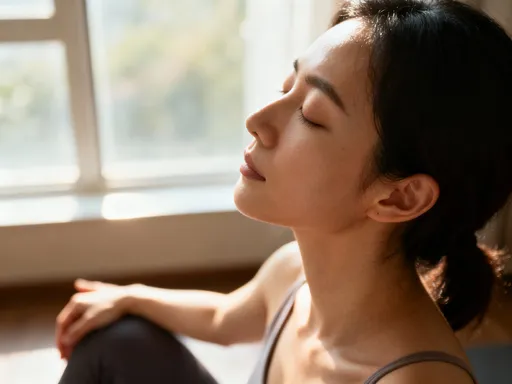
Ever feel like your mind won’t shut off? I was stuck in constant mental noise—until I tried qigong. This ancient practice didn’t just slow my breath; it reshaped my thoughts. Backed by traditional Chinese medicine, qigong blends gentle movement and focused awareness to support psychological balance. No quick fixes, just real shifts. Here’s how it quietly transformed my inner world—and how it might help yours too.
The Mental Clutter Epidemic: Why Modern Life Overloads the Mind
In today’s world, the mind rarely gets a break. From the moment we wake, our attention is pulled in multiple directions—emails, notifications, household tasks, family needs, work deadlines. This constant stream of input creates what many experts describe as cognitive overload. The brain, designed to respond to immediate threats and solve problems, is now processing endless streams of non-urgent information, leading to mental fatigue. For many women in their 30s to 55s, who often serve as emotional anchors in their families, this burden is amplified. They carry not only their own stress but also absorb the emotional weight of others.
Chronic mental tension isn’t just uncomfortable—it has measurable effects on health. Studies have shown that prolonged stress increases cortisol levels, disrupts sleep, weakens immune function, and contributes to anxiety and low mood. The American Psychological Association has reported that stress is a key factor in many common health complaints, particularly among middle-aged adults managing multiple roles. While medication and therapy are valuable tools, they aren’t the only paths to relief. Many are turning to complementary practices that help regulate the nervous system without side effects. One such practice, with roots stretching back thousands of years, is qigong.
Qigong offers a gentle yet powerful way to interrupt the cycle of mental clutter. Unlike high-intensity workouts that can further stress the body, or passive relaxation that may not address underlying tension, qigong works by aligning breath, movement, and awareness. It activates the parasympathetic nervous system—the body’s “rest and digest” mode—helping to slow heart rate, deepen breathing, and quiet mental chatter. It doesn’t require special equipment or a fitness background. What it does require is consistency and a willingness to slow down, two qualities that are rare but deeply healing in modern life.
Qigong Unpacked: More Than Just Movement
At its core, qigong is a practice of cultivating and balancing *qi*—a concept in traditional Chinese medicine that refers to the vital energy believed to flow through all living things. While the idea of energy may sound abstract, in practice, qigong is very tangible. It involves coordinated breathing, gentle physical movements, and a focused mind. Think of it as moving meditation, where each motion is performed with intention and awareness. The goal isn’t to build muscle or burn calories, but to create harmony between body and mind.
Traditional Chinese medicine views emotional health as deeply connected to the flow of qi. When this flow is blocked or imbalanced, it can manifest as irritability, fatigue, or difficulty concentrating. Qigong aims to clear these blockages through rhythmic motion and deep, diaphragmatic breathing. For example, lifting the arms slowly while inhaling is thought to draw energy upward, while lowering them while exhaling helps release tension. These movements are not random—they follow patterns designed to stimulate specific energy pathways, or meridians, in the body.
What sets qigong apart from other forms of exercise is its emphasis on internal awareness. While yoga also combines breath and movement, qigong places greater focus on the sensation of energy and the quieting of the mind. Unlike running or strength training, which engage the sympathetic nervous system (the “fight or flight” response), qigong gently activates the parasympathetic system, promoting calm and restoration. It’s not about pushing the body to its limits, but about listening to it. This makes it especially suitable for those who feel overwhelmed, injured, or simply too tired for vigorous activity.
The Mind-Body Link: How Subtle Motion Influences Mental State
The connection between physical movement and mental state is well-supported by modern science, even if the language differs from traditional teachings. When we move slowly and rhythmically, we send signals to the brain that the body is safe. This helps reduce activity in the amygdala, the brain’s fear center, and increases activity in the prefrontal cortex, which governs decision-making and emotional regulation. In simple terms, gentle movement can help us feel less reactive and more in control.
One key mechanism is interoception—the ability to sense what’s happening inside the body. Many people, especially those under chronic stress, become disconnected from their physical sensations. They may not notice tension in the shoulders, shallow breathing, or a clenched jaw until it leads to pain or fatigue. Qigong strengthens interoception by directing attention to breath, posture, and subtle energy shifts. Over time, practitioners become more aware of early signs of stress and can intervene before it escalates.
This heightened body awareness disrupts the cycle of rumination—repetitive, negative thinking that often accompanies anxiety and low mood. When the mind is caught in a loop of worry, focusing on a slow, deliberate movement can serve as an anchor. The physical act of lifting the arms, turning the palms, or shifting weight becomes a point of focus that pulls attention away from distressing thoughts. It’s not about suppressing emotions, but about creating space around them. With regular practice, this space allows for greater clarity and emotional resilience.
My Go-To Qigong Routine for Mental Reset (And How to Start)
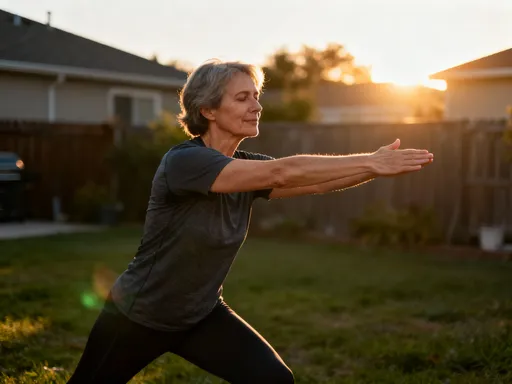
One of the most accessible ways to begin qigong is with a simple 10-minute routine that can be done at home, with no equipment. I’ve found that doing it first thing in the morning—before checking my phone or starting chores—sets a calm tone for the day. The sequence I use includes three foundational movements: Lifting the Sky, Separating Heaven and Earth, and Microcosmic Orbit breathing. Each has a specific purpose and can be adapted to different levels of mobility.
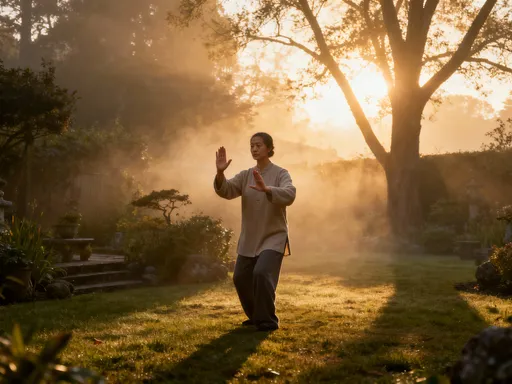
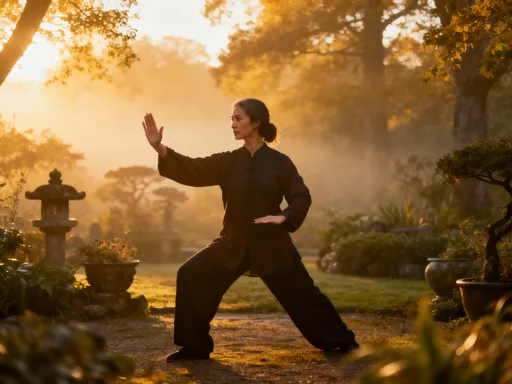
The first movement, Lifting the Sky, begins with feet shoulder-width apart and knees slightly bent. Hands start at the sides, then slowly rise in front of the body as you inhale, palms facing up. As the arms reach overhead, fingers point toward the sky, and there’s a gentle stretch through the torso. On the exhale, hands lower slowly, as if pressing down on water, returning to the starting position. This movement encourages deep breathing and creates a sense of expansion. I’ve noticed that after just a few rounds, my shoulders relax and my mind feels less crowded.
The second movement, Separating Heaven and Earth, builds on this flow. One hand rises toward the sky while the other lowers toward the ground, palms facing outward. As you inhale, the upper hand lifts; as you exhale, the lower hand sinks. Then, with a smooth transition, the hands switch positions. This motion symbolizes balance—connecting with both the earth and the sky, grounding and uplifting at once. I’ve found it particularly helpful when I feel emotionally scattered or indecisive. It brings a sense of centeredness that’s hard to describe but easy to feel.
The third element is Microcosmic Orbit breathing, a seated or standing practice that focuses on breath circulation. Without complex visualization, I simply breathe deeply into the lower abdomen, pause briefly, and then allow the breath to rise up the spine and down the front of the body in a continuous loop. This isn’t about forcing energy, but about maintaining a steady, rhythmic breath. Even three minutes of this practice can shift my state from tense to tranquil. I’ve shared this routine with friends who were skeptical, and many have reported better sleep and less daytime anxiety after just a week of consistent practice.
Psychological Benefits Backed by Principle, Not Hype
While qigong is not a substitute for professional mental health care, its benefits for emotional well-being are increasingly recognized. Regular practice supports psychological resilience by training the nervous system to return to balance more quickly after stress. This doesn’t mean eliminating stress—life will always have challenges—but it does mean developing a steadier response to them. Over time, I’ve noticed that I’m less reactive to small frustrations, like a delayed appointment or a family disagreement. Instead of snapping or withdrawing, I find myself pausing, taking a breath, and choosing a calmer response.
Another benefit is increased presence. In a world that rewards multitasking, being fully in the moment has become rare. Qigong cultivates presence by requiring attention to breath, movement, and sensation. This focus doesn’t come easily at first—my mind used to wander constantly. But with practice, I’ve developed a greater capacity to stay with the present moment, both during the routine and in daily life. This has improved my relationships, as I’m able to listen more deeply and respond more thoughtfully.
Emotional self-regulation is another key outcome. By learning to recognize the physical signs of stress—tight chest, shallow breath, clenched jaw—I can intervene early with a few slow movements or a minute of focused breathing. This prevents small stressors from building into larger emotional reactions. I don’t claim to be free of anxiety or sadness, but I now have tools to navigate them with more grace. These changes aren’t dramatic or immediate, but they are real and sustainable, aligning with holistic principles of gradual, natural healing.
Making It Stick: Fitting Qigong into Real Life
One of the biggest challenges with any new practice is consistency. Many people start with enthusiasm but struggle to maintain the habit. The key, I’ve learned, is to make it effortless. I began with just three minutes a day—less than the time it takes to brew a cup of tea. I paired it with my morning ritual: after boiling the kettle, I’d step into my living room, close the curtains, and do a short sequence. This small commitment removed the pressure to “do it right” or “do it long.” Over time, three minutes became five, then ten.
Another helpful strategy was using phone reminders. I set a gentle chime for 7:15 a.m., not as a demand, but as an invitation. If I missed it, I didn’t scold myself. I simply tried again the next day. This non-judgmental approach made it easier to return after lapses. I also created a quiet corner in my home—a small space with a cushion, a candle, and a soft blanket. Having a dedicated area made the practice feel special, not like another chore.
For those who feel skeptical or impatient, I suggest approaching qigong as an experiment, not a solution. Try it for ten days with no expectation of results. Notice how you feel—not just mentally, but physically. Do your shoulders feel lighter? Is your breath deeper? These subtle shifts are the real indicators of change. Some people find support in community, whether through local classes or online groups. Sharing experiences with others who are on a similar path can provide encouragement and accountability. The goal isn’t perfection, but presence.
Beyond the Mat: How Qigong Changes Your Everyday Mindset
The most profound changes from qigong aren’t confined to the practice itself—they ripple into daily life. Over months of consistent practice, I’ve noticed a shift in my overall mindset. I’m more patient—with myself, with my family, with the inevitable delays and disappointments of life. This isn’t because my circumstances have changed, but because my internal response has. Where I once reacted quickly to stress, I now have a pause. That pause, however brief, creates space for choice.
Emotional awareness has deepened, too. I’m better at identifying what I’m feeling and why. Instead of labeling an emotion as “bad” and trying to push it away, I’ve learned to acknowledge it with curiosity. This doesn’t mean indulging in negativity, but allowing space for it to exist without being overwhelmed. This shift has improved my relationships, as I’m less likely to project my stress onto others. I’ve also become more attuned to the needs of my body—when to rest, when to move, when to speak, when to listen.
Perhaps the most valuable lesson qigong has taught me is that calm is not the absence of chaos, but a state we can return to, again and again. It’s not about achieving perfection or eliminating all stress. It’s about cultivating a steady inner presence that remains accessible, even in the midst of life’s demands. This presence isn’t loud or dramatic—it’s quiet, subtle, and deeply resilient. It’s the difference between being carried away by the current and learning to float with it.
Qigong didn’t erase life’s challenges—but it gave me a steadier mind to face them. By aligning breath, body, and attention, it offers a quiet power most of us overlook. You don’t need hours or expertise; just willingness to begin. In a world that never slows down, this ancient practice teaches a radical act: returning, again and again, to calm.