How I Upgraded My Balance Without Even Trying—And Why It Changed Everything
Balance isn’t just about standing on one leg—it’s a hidden pillar of everyday health. I used to dismiss it until I noticed small stumbles becoming more frequent. Turns out, balance affects mobility, confidence, and long-term independence. After diving into simple, science-backed habits, I saw real shifts—no fancy gear, just consistency. This is what actually worked for me, and why optimizing balance might be the most overlooked move for better overall health.
The Silent Crisis of Poor Balance
Modern life has quietly stripped away the natural challenges that once kept our balance sharp. Decades ago, daily routines involved varied terrain, physical labor, and constant micro-adjustments—walking on uneven ground, climbing stairs, or carrying groceries up a hill. Today, smooth floors, elevators, and sedentary jobs mean our bodies face fewer balance demands. As a result, the systems responsible for stability gradually weaken, often without notice. This decline isn’t limited to older adults. Even women in their 30s and 40s may find themselves feeling unsteady on a moving bus, wobbling slightly when stepping off a curb, or relying heavily on handrails going downstairs.
These small missteps are more than minor annoyances—they’re early warning signs. The body’s balance system, like any other, follows the 'use it or lose it' principle. When it’s underused, neural pathways that coordinate movement become less responsive. Over time, this increases the risk of falls, which can lead to serious injuries such as fractures or joint damage. For busy women managing homes, careers, and families, a fall isn’t just physically disruptive—it can derail routines, limit independence, and erode confidence. The irony is that balance training is rarely prioritized, even though it’s foundational to staying active and capable across the lifespan.
Another contributor to declining balance is our screen-dominated lifestyle. Hours spent looking down at phones or fixed on computer monitors reduce neck mobility and limit visual scanning—both of which play a role in spatial awareness. When the eyes and neck aren’t regularly moving through their full range, the brain receives less information about the body’s position in space. This sensory deprivation subtly impairs balance without triggering immediate alarm. Add to that prolonged sitting, which weakens core and leg muscles essential for stability, and the modern environment becomes a perfect storm for balance deterioration. The good news? These effects are reversible with mindful, consistent effort.
Why Balance Matters More Than You Think
Beyond preventing falls, balance is a window into overall health. It’s not just a physical skill—it’s a complex collaboration between multiple body systems. The vestibular system in the inner ear detects head motion and spatial orientation. Proprioception, often called the 'sixth sense,' allows the body to know where its limbs are without looking. Neuromuscular coordination ensures that muscles respond quickly and accurately to changes in position. When these systems work together seamlessly, balance feels effortless. But when one lags—due to age, inactivity, or minor injury—the whole system falters.
Research shows that balance is closely tied to brain health. Studies have found that individuals with better balance tend to perform better on cognitive tests, particularly those involving attention, memory, and executive function. One possible explanation is that balance training stimulates the cerebellum, a brain region involved in both motor control and certain cognitive processes. By challenging the body to stay stable, we also engage neural networks that support mental clarity and focus. This mind-body connection means that improving balance isn’t just about physical safety—it’s also a form of brain fitness.
Beyond cognition, balance influences posture and joint health. Poor balance often leads to compensatory movements—leaning too far forward, gripping railings tightly, or shuffling while walking. These habits place extra strain on the knees, hips, and lower back, increasing the risk of chronic pain. On the other hand, good balance promotes efficient movement patterns, reducing wear and tear on the body. It also enhances confidence in physical abilities, making women more likely to stay active, try new activities, and maintain independence as they age. In this way, balance acts as both a protector and an enabler of long-term well-being.
My Wake-Up Call: A Personal Turning Point
The moment I realized something was off came during a routine walk in the park. I stepped onto a slightly raised tree root and wobbled unexpectedly, catching myself just in time. No one saw it, but the incident stayed with me. A few weeks later, it happened again—this time on a flat sidewalk, for no clear reason. I hadn’t twisted my ankle or been distracted. The simple act of walking had become momentarily unstable. That’s when I started paying attention. I noticed I no longer walked barefoot on the beach the way I used to, flinching at pebbles and sand. I held onto the shower wall more than necessary. I avoided stepping over garden hoses or curbs without support.
Emotionally, it was unsettling. I had always considered myself active and healthy—someone who walked daily, did light strength training, and ate well. Yet here I was, feeling less in control of my own body. There was a quiet fear beneath the surface: if I couldn’t trust my balance now, what would it be like in ten or twenty years? I didn’t want to become someone who avoided stairs, feared walking on ice, or needed help getting up from a chair. That fear sparked a shift. I decided to stop waiting for a fall to be the catalyst for change. Instead, I would take small, proactive steps to rebuild what I had lost—not through intense workouts, but through consistent, everyday habits.
I began by researching balance science and consulting a physical therapist, who confirmed that my experience was common and reversible. She explained that balance isn’t a fixed trait—it’s a skill that can be improved at any age. The nervous system remains adaptable, and even minor daily challenges can stimulate improvement. This was empowering. It meant I didn’t need a gym membership or special equipment. I just needed awareness and consistency. That conversation became the foundation of my journey—one rooted in patience, observation, and self-care rather than performance or perfection.
The Daily Habits That Made the Difference
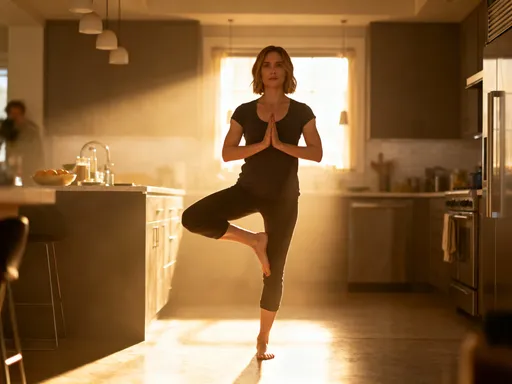
The most effective changes I made were also the simplest. I started by incorporating balance challenges into activities I already did every day. For example, while brushing my teeth—two minutes, twice a day—I began standing on one leg. At first, I could barely last 15 seconds without grabbing the sink. My ankle wobbled, my hips swayed, and my core felt disconnected. But I kept at it, switching legs halfway through. Over time, I noticed I could stand longer, with less effort. The act of balancing on one foot activates the small stabilizing muscles in the feet, ankles, and hips, while also engaging the core and improving focus.
Another habit was walking heel-to-toe down the hallway, like a sobriety test. This 'tandem walk' forces the body to maintain a narrow base of support, challenging both balance and coordination. I started with just ten steps, holding onto a wall if needed. Within a few weeks, I could do it unassisted, and eventually added gentle head turns while walking to further challenge my vestibular system. These micro-movements, done daily, began to retrain my nervous system. They sent new signals to the brain about body position, improving my ability to adjust quickly when stepping on uneven surfaces.
I also made a conscious effort to reduce prolonged sitting. Every hour, I stood up and shifted my weight from one foot to the other, or did a few slow heel raises. These small breaks disrupted the stiffness that comes from inactivity and kept my muscles engaged. I stopped crossing my legs, which can impair circulation and weaken hip stability over time. Instead, I sat with both feet flat on the floor, occasionally lifting one foot slightly to engage the ankle muscles. These habits weren’t time-consuming or strenuous, but their cumulative effect was significant. They turned passive moments into opportunities for subtle training, reinforcing balance without requiring extra effort.
Movement Variations That Build Real Stability
Once the daily habits became routine, I introduced a few additional exercises to deepen my progress. One of the most helpful was the slow heel raise. Standing near a counter for light support, I slowly lifted my heels off the ground, rising onto my toes, then lowering back down with control. This movement strengthens the calf muscles and improves ankle stability—key components of balance. I started with two sets of ten, focusing on smooth, controlled motion rather than speed. Over time, I progressed to doing them on a slightly raised surface, like a step, to increase range of motion.
Another effective exercise was standing with my feet together and turning my head side to side. This challenges the vestibular system by creating movement in the head while the body remains still. At first, I felt slightly dizzy, a sign that my inner ear wasn’t used to processing this type of input. But with regular practice, the dizziness faded, and my ability to maintain stability during head movements improved. This is particularly useful in real-life situations, such as looking over your shoulder while walking or turning to speak to someone while standing.
I also began stepping over low household objects—like a rolled-up towel or a shoe—to simulate navigating small obstacles. This improves spatial awareness and coordination, skills that are essential for avoiding trips and falls. I practiced stepping forward, backward, and sideways, ensuring I could shift my weight smoothly in all directions. These movements mimic real-world challenges and help the body respond more efficiently to unexpected changes in terrain. I started with just five minutes a day, gradually increasing as my confidence grew. The key was consistency, not intensity. I learned to celebrate small wins—holding a balance pose for five seconds longer, stepping over an object without hesitation, or walking barefoot on grass without feeling unsteady.
Lifestyle Tweaks for Long-Term Gains
Beyond exercises, I made environmental changes that supported better balance. One of the most impactful was going barefoot indoors when it was safe to do so. Wearing shoes all day, especially those with thick, cushioned soles, reduces sensory feedback from the feet. The soles of the feet are packed with nerve endings that help the brain understand the surface beneath us. When this input is dulled, balance suffers. By walking barefoot on hardwood, tile, or carpet, I restored some of that feedback, allowing my feet to 'feel' the ground and make micro-adjustments naturally.
When outdoors, I chose varied terrain whenever possible. Instead of sticking to paved sidewalks, I walked on grass, gravel, or packed dirt trails. These surfaces require more balance control, gently challenging the body in ways that flat ground does not. Even a short detour through a park could become a mini balance workout. I also paid attention to my footwear. While supportive shoes are necessary for certain conditions, I avoided over-stabilized models that limit foot movement. Instead, I opted for shoes with flexible soles and a lower heel, which allow the foot to move more naturally. This doesn’t mean abandoning comfort—just choosing footwear that supports function as well as fit.
I also became more mindful of how I moved throughout the day. I stopped rushing up and down stairs, taking the time to place each foot fully on the step. I practiced standing up from chairs without using my hands, engaging my leg and core muscles to rise smoothly. These small choices reinforced balance in real-time, turning everyday actions into opportunities for improvement. Over time, I noticed a shift—not just in my physical stability, but in my awareness of my body. I moved with more intention, felt more grounded, and approached physical tasks with greater confidence.
When to Seek Professional Guidance
While most people can safely improve balance through self-directed habits, there are times when professional input is essential. If you experience frequent near-falls, unexplained dizziness, or a sensation of spinning (vertigo), it’s important to consult a healthcare provider. These symptoms may indicate underlying issues such as inner ear disorders, neurological conditions, or medication side effects. A physical therapist can perform a thorough balance assessment, identifying specific weaknesses and designing a personalized plan to address them.
Professional guidance is also valuable if balance problems interfere with daily activities—such as dressing, bathing, or walking through the house. A therapist can introduce targeted exercises, use specialized equipment like balance boards or foam pads, and monitor progress over time. They can also help differentiate between normal age-related changes and more serious concerns. For women managing chronic conditions like arthritis, diabetes, or osteoporosis, a tailored approach ensures safety and effectiveness.
It’s important to remember that working on balance is not a sign of weakness or impending decline. It’s a proactive choice to maintain independence and quality of life. Seeking help is not a failure—it’s a smart, responsible step toward long-term health. Even with professional support, the principles remain the same: small, consistent efforts yield meaningful results. The goal isn’t perfection, but progress—building a body that can meet life’s physical demands with resilience and confidence.
Conclusion: Balance as a Lifelong Investment
Better balance didn’t come overnight, but it didn’t require drastic changes either. It came from small, repeated actions—brushing my teeth on one leg, walking with awareness, stepping over a shoe, going barefoot at home. These habits, woven into daily life, gradually rebuilt my stability and confidence. What started as a response to fear became a practice of empowerment. I no longer dread uneven sidewalks or worry about losing my footing. I feel more connected to my body, more capable in my movements, and more secure in my independence.
Balanced health is not a destination—it’s an ongoing process. Just as saving money early creates compound interest, investing in balance today pays dividends in mobility, safety, and well-being for years to come. It’s not about achieving perfect stillness, but about cultivating resilience, adaptability, and awareness. Every time you stand on one foot, walk mindfully, or choose varied terrain, you’re strengthening the connection between your body and brain.
For women juggling responsibilities and caring for others, this kind of self-care is not indulgent—it’s essential. By prioritizing balance, you’re not just preventing falls; you’re preserving your ability to live fully, actively, and independently. You’re making a quiet but powerful commitment to your future self. And the best part? You don’t need extra time, money, or equipment. You just need to start—wherever you are, whatever you’re doing. Because balance isn’t something you achieve. It’s something you practice, every single day.