Lost in the Hidden Corners of Lubeck—My Secret Walks Through Its Soul
Stepping into Lubeck feels like opening a weathered storybook where every alley whispers history. I didn’t come for the postcard sights—I wandered deeper, drawn to quiet districts where cobblestones echo with centuries of Hanseatic trade, hidden courtyards, and half-timbered homes frozen in time. This isn’t just a city; it’s a living archive. Let me take you where maps don’t, into the authentic heartbeats of Lubeck’s most soulful neighborhoods. Beyond the spires of the Marienkirche and the bustle of the Holstentor, a quieter rhythm pulses—one that reveals itself only to those who walk slowly, listen closely, and dare to turn down unmarked lanes. This is Lubeck as it breathes today, not just as it once was.
The Allure of Lubeck’s Old Town: More Than Just Bricks and Timber
Lubeck’s Altstadt, a UNESCO World Heritage Site since 1982, stands as one of Europe’s best-preserved medieval city centers. With over 1,500 listed buildings, its skyline is crowned by seven historic church spires, most notably the twin towers of the Marienkirche, which have watched over the city since the 13th century. The streets follow a layout largely unchanged since the 1200s, radiating from the central marketplace like veins from a heart. Walking here, one feels the weight of centuries—the same stones trod by Hanseatic merchants who once controlled Baltic trade routes now carry tourists, students, and locals on errands.
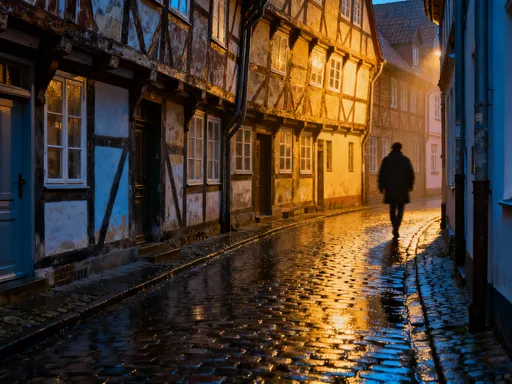
Yet for all its beauty, the core of the Altstadt can feel crowded, especially in summer months when cruise passengers flood the Holstentor and flock to Niederegger’s marzipan shop. The charm of the marketplace, while undeniable, often plays out like a well-rehearsed performance. The true soul of Lubeck, however, doesn’t reside solely in these polished surfaces. It lingers in the shadows of alleyways, behind weathered facades, and in the quiet hum of side streets where laundry flaps above flower boxes and cats nap on sun-warmed steps. These are the spaces just beyond the guidebooks, where daily life unfolds without spectacle.
What makes the Altstadt enduring is not merely its architecture, but its continuity. Unlike reconstructed cities, Lubeck’s historic core has remained inhabited, evolving rather than being preserved in amber. Even after the devastating air raids of 1942, which destroyed much of the city center, the people of Lubeck chose to rebuild with reverence, using original plans and materials where possible. This commitment to authenticity gives the city a rare depth—its scars are visible, its memories intact. But to fully appreciate this resilience, one must look beyond the monuments and into the living fabric of its neighborhoods.
It is here, in the interplay between tourist and resident, between curated history and unscripted life, that Lubeck reveals its duality. The postcard view of the Holstentor is real, but so is the grandmother watering geraniums in a hidden courtyard five steps off the main path. The key to understanding Lubeck is not in choosing one over the other, but in embracing both—the grand narrative and the quiet details that give it meaning.
Behind the Facades: Discovering the Innenhöfe (Inner Courtyards)
One of Lubeck’s most enchanting secrets lies behind unassuming doorways: the Innenhöfe, or inner courtyards. These secluded spaces, tucked behind street-level buildings, were once the operational hearts of wealthy merchant homes. In the Hanseatic era, a merchant’s house was not just a residence but a business hub—goods were stored, accounts settled, and deals sealed within these sheltered enclosures. Today, many of these courtyards remain private, accessible only to residents, but dozens are open to the public, offering unexpected oases of calm amid the urban flow.
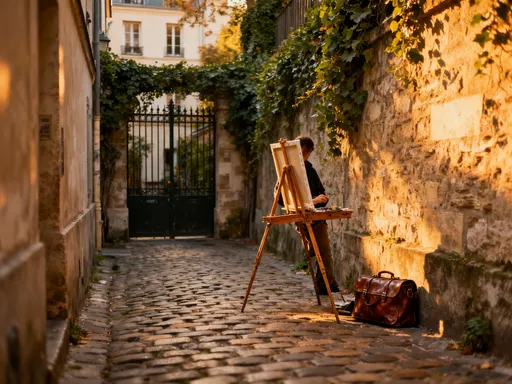
Wandering through the Altstadt, one might pass a narrow archway barely wide enough for two people. Step through, and suddenly you’re in another world—a cobblestone square softened by climbing ivy, a wisteria-draped pergola, or a small garden where bees hover over lavender. Some courtyards retain their original wells or stone troughs; others have been transformed into communal seating areas with benches and potted herbs. The air here feels different—cooler, quieter, as if time slows a few paces from the main street.
There are over 80 documented Innenhöfe in Lubeck, each with its own character. The Engelhof, one of the oldest, dates back to the 13th century and features a striking half-timbered building surrounding a cobbled yard. The Salzspeicherhof, near the old salt warehouses, retains a more industrial feel, with thick stone walls that once protected valuable cargo. Others, like the Wehkamp’s Hof, have been gently restored with modern touches—solar lighting, discreet signage—while preserving their historic essence.
What makes these spaces so powerful is their contrast. They are not designed for spectacle but for intimacy. They invite pause, reflection, and a kind of quiet discovery that cannot be rushed. For visitors, they offer a rare chance to experience Lubeck not as a museum, but as a lived-in city. Locals use them for morning coffee, afternoon reading, or evening conversations in hushed tones. To find one is to feel like you’ve been let in on a secret—one that doesn’t need to be shared, only felt.
The Charm of St. Jürgen: A Local’s Neighborhood with Maritime Flair
Just a ten-minute walk from the Altstadt, across the Trave River, lies St. Jürgen—a residential district that embodies the everyday elegance of Lubeck life. Unlike the tightly packed lanes of the old city, St. Jürgen unfolds in broad, tree-lined streets where 19th-century villas stand beside modest cottages, many painted in soft pastels with white trim. The neighborhood has a maritime soul; its proximity to the river means many homes have small docks or private access to the water, and the scent of damp wood and fresh paint often drifts through the air.
St. Jürgen is not on most tourist itineraries, yet it offers some of the most authentic glimpses into local culture. The weekly farmers’ market on Jürgenstraße draws families with strollers, retirees with shopping bags, and dogs on leashes. Stalls overflow with regional produce—crisp apples from Holstein orchards, smoked eel from nearby coastal villages, and honey harvested from rooftop hives. A bakery near the church sells rye bread still warm from the oven, its crust crackling as it cools. There is no performative charm here—just the steady rhythm of community life.
The district’s connection to the water defines its character. The Trave River, which flows through Lubeck to the Baltic Sea, has long been a lifeline for trade and travel. In St. Jürgen, this legacy lives on in the small marina where private boats are moored, their sails folded like sleeping wings. Evening walks along the riverbank are a local ritual—parents push strollers, couples stroll hand in hand, and joggers follow the paved path that curves gently through reeds and willows. In spring, the riverbanks burst with yellow iris and purple loosestrife; in autumn, the trees reflect gold and copper in the slow-moving current.
What makes St. Jürgen special is its balance—a place that feels both settled and alive. Children ride bicycles on quiet streets, their laughter echoing off brick walls. Garden gates stand open, revealing neat rows of vegetables and climbing roses. Yet the neighborhood is not frozen in time; it evolves quietly, with new families moving in, cafes opening in converted garages, and artists renting studio spaces above shops. It is a reminder that Lubeck is not only a city of history, but of ongoing life.
Exploring Burgtor and Kühberg: Where History Meets Modern Living
To the southeast of the Altstadt, the districts of Burgtor and Kühberg occupy a unique position—once on the edge of medieval Lubeck, now seamlessly woven into the city’s modern fabric. Burgtor, named after one of the original city gates, retains fragments of the 15th-century fortifications, including sections of the old wall and the moat that once protected the city. Today, these remnants are integrated into public parks, where children climb on stone ruins and couples picnic beneath ancient oaks. The juxtaposition is striking: a jogger in headphones passes a centuries-old turret, and a toddler points at a weathered relief of a griffin.
Kühberg, adjacent to Burgtor, was once home to craftsmen and laborers who worked in the city’s shipyards and warehouses. In the postwar years, many of its buildings were damaged or neglected, but since the 1990s, the area has undergone careful revitalization. Old tenements have been converted into bright, energy-efficient apartments, often with rooftop terraces and communal gardens. The renovation respects the original architectural language—steep gables, narrow windows, brick facades—while incorporating modern insulation, solar panels, and sustainable water systems.
These districts attract a mix of residents: young professionals, artists, and families drawn to the blend of history and comfort. Cafes with large windows serve organic coffee and homemade cakes, their menus changing with the seasons. A community center hosts yoga classes, language exchanges, and children’s theater workshops. On weekends, the Kühberg market offers handmade soaps, woolen scarves, and pottery from local artisans. There is a sense of intentionality here—a desire to live well without sacrificing heritage.
What sets Burgtor and Kühberg apart is their authenticity. Unlike neighborhoods developed for tourism, these areas were rebuilt for people—to live, raise children, and grow old. The past is not curated for display but lived with daily. A woman waters her window boxes in a building that survived the 1942 bombing; a man repairs his bicycle beneath a gable that once bore a merchant’s coat of arms. This continuity—between then and now, between preservation and progress—is what gives Lubeck its enduring strength.
The Quiet Beauty of Moisling: Nature, Tranquility, and Community
Further south, nestled against the edge of the Lauerholz forest, lies Moisling—a residential district that feels more like a village than a city neighborhood. With winding paths, green front yards, and an abundance of trees, Moisling offers a striking contrast to the dense urban core. It is a place of space and stillness, where birdsong replaces traffic noise and the pace of life slows naturally. Many homes here were built in the early 20th century in the garden city style, emphasizing harmony between architecture and nature.
The district’s proximity to the forest makes it a haven for outdoor enthusiasts. A network of well-marked trails leads into the woods, where beech and oak trees form a canopy that shifts with the seasons. Morning joggers and dog walkers follow the same paths, exchanging quiet greetings. In winter, a light dusting of snow transforms the landscape into a monochrome painting; in summer, sunlight filters through the leaves in dappled patterns. A small pond near the edge of the forest attracts ducks and herons, and benches along the path invite contemplation.
Moisling also has a strong sense of community. The neighborhood center hosts a weekly knitting circle, a book club, and seasonal festivals—May Day celebrations with maypoles, autumn harvest fairs with apple pressing, and Christmas markets with handmade ornaments. A café run by volunteers serves fair-trade tea and cakes baked by residents, with proceeds supporting local projects. Children play in a shared garden where vegetables and flowers grow side by side, tended by families on rotating schedules.
Sustainability is a quiet but constant theme. Solar panels are common on rooftops, rainwater is collected in barrels, and compost bins stand beside back doors. The district participates in Lubeck’s green initiative, which promotes urban gardening, waste reduction, and energy efficiency. Yet these efforts are not performative—they are simply part of daily life, as natural as locking the front door or watering the plants. In Moisling, one sees how a city can grow without losing its soul.
Practical Magic: How to Explore Lubeck’s Districts Like a Local
To truly experience Lubeck beyond the tourist trail, a shift in approach is needed. Start by leaving the main attractions early in the morning or later in the afternoon, when crowds thin and light softens. Wear comfortable walking shoes—cobblestones are charming but unforgiving, and many hidden paths are uneven. A lightweight backpack with water, a small snack, and a city map is sufficient; Lubeck is compact and easily navigable on foot or by bicycle.
Begin in the Altstadt, but don’t linger too long. Take a left down Aegidienstraße and follow the signs toward St. Jürgen. Cross the Holstentorbrücke and turn right along the riverbank—this path leads directly into the heart of the neighborhood. Allow at least two hours to explore St. Jürgen, with stops at the market and a riverside bench. From there, walk southeast to Burgtor, passing the remains of the city wall and entering the green space near the moat. Continue to Kühberg, where the mix of old and new architecture tells a story of renewal.
To reach Moisling, take bus line 5 from the central station (Hauptbahnhof) and get off at Moisling Dorf. The ride takes about 15 minutes, and the stop is just steps from the forest trailhead. Spend a few hours walking the woods, visiting the neighborhood café, and observing daily life. Return in time for a late lunch in the Altstadt, perhaps at a quiet bistro off the main square.
Respect is essential when exploring residential areas. Keep noise to a minimum, avoid photographing private homes without permission, and stay on marked paths. These neighborhoods are not exhibits—they are homes. The best way to honor them is to move quietly, observe thoughtfully, and leave no trace. If you wish to engage with locals, a simple greeting—"Guten Tag"—goes a long way. Many residents appreciate visitors who show genuine interest in their city, not just its postcard views.
Timing matters. A half-day exploration allows a taste of one or two districts; a full day lets you experience the contrast between urban and green, historic and modern. Spring and early autumn offer the most pleasant weather, with mild temperatures and fewer crowds. Winter visits are quieter still, with a certain stillness that enhances the city’s reflective mood.
Why These Hidden Districts Define Lubeck’s True Character
Lubeck’s identity cannot be captured in a single photograph or summarized in a guidebook entry. It is not only in the grandeur of its churches or the fame of its marzipan. Its true character lies in the spaces between—the courtyards where time stands still, the riverbanks where families gather, the forest edges where silence speaks. These hidden districts reveal a city that honors its past without being trapped by it, that embraces modern life without losing its soul.
What makes Lubeck exceptional is its continuity—a thread that connects the Hanseatic merchant to the modern resident, the 13th-century wall to the solar-powered home. This is not a city preserved for display, but one that lives, breathes, and evolves. To walk its lesser-known streets is to understand that heritage is not just in stone, but in rhythm—in the daily rituals of baking, gardening, walking, and gathering.
For the traveler seeking depth, Lubeck offers a rare gift: the chance to move beyond sightseeing and into connection. It invites slowness, curiosity, and presence. It rewards those who look beyond the obvious and listen to the whispers in the alleyways. In doing so, one doesn’t just visit Lubeck—one begins to feel at home in it.
So let the crowds gather at the Holstentor. You, take the quieter path. Step through the archway, cross the river, follow the forest trail. Let the city reveal itself not in monuments, but in moments—a cat in a sunbeam, a gardener pruning roses, a child’s laugh echoing in a courtyard. These are the true landmarks of Lubeck. And in their quiet way, they tell the most enduring story of all.