You Won’t Believe Rio’s Hidden Architectural Vibes
When I first wandered through Rio de Janeiro, I expected beaches and carnival—but not the mind-blowing architecture hiding in plain sight. From colonial gems to bold modernist statements, the city’s skyline tells a story of culture, resilience, and creativity. What surprised me most? How each neighborhood flaunts a completely different architectural soul. Let me take you on a journey through the stunning, unexpected designs shaping Brazil’s most vibrant city.
First Impressions: Beyond Beaches and Samba
Rio de Janeiro is often celebrated for its postcard-perfect landscapes: the sweeping arc of Copacabana Beach, the towering arms of Christ the Redeemer overlooking the city, and the pulsating rhythms of samba during Carnival. These images dominate travel brochures and social media feeds, painting a picture of a city defined by natural beauty and cultural exuberance. Yet, beneath this familiar surface lies a quieter, equally powerful narrative—one written in stone, concrete, and tile. For many visitors, including myself, the architectural depth of Rio remains invisible at first glance, overshadowed by the dazzle of its coastline and festivals.
It wasn’t until I stepped off the main thoroughfares and into the winding streets of Santa Teresa that I began to notice the details. A mosaic-tiled staircase here, a wrought-iron balcony there, a faded pastel facade with intricate cornices—all whispering stories of centuries past. What struck me was not just the beauty of these structures, but their variety. In one block, I saw a Portuguese colonial house with wooden shutters and red-tiled roof; just around the corner stood a sleek modernist apartment building with sweeping curves and floor-to-ceiling glass. Rio, I realized, is not a monolith. It is a living collage of architectural evolution, where every era has left its mark.
This layered identity reflects the city’s complex history as a colonial port, imperial capital, and modern metropolis. Unlike cities that were rebuilt after wars or disasters, Rio has grown organically, often preserving the old even as the new rises beside it. The result is an urban fabric rich in contrast and continuity. Travelers who take the time to look beyond the beach will find that Rio’s architecture offers a deeper, more intimate understanding of its soul—one shaped by waves of migration, economic shifts, and artistic innovation. It’s a city where design is not just functional, but deeply expressive.
Colonial Roots: Where It All Began
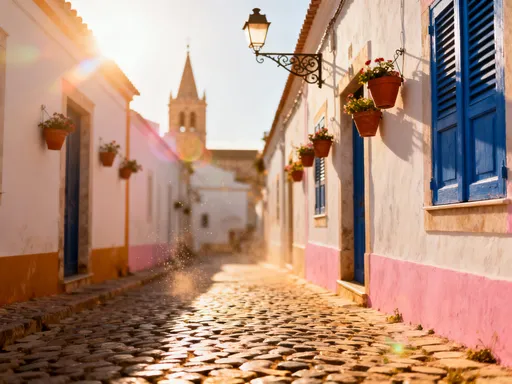
The architectural story of Rio begins in the 16th century, when Portuguese settlers established a colonial outpost along Guanabara Bay. The early buildings were modest, constructed from local materials like timber, stone, and clay tiles, designed to withstand the humid tropical climate. Over time, as Rio grew in importance, more permanent structures emerged, reflecting both European influences and adaptations to the Brazilian environment. The colonial style that developed was characterized by thick stucco walls in soft pastel hues—pale yellows, blues, and pinks—that helped reflect the intense sunlight, along with wooden shutters and tiled roofs that provided insulation and protection from rain.
One of the best places to experience this early architectural heritage is in the historic center, known as Centro, and the adjacent hilltop neighborhood of Santa Teresa. Here, centuries-old churches, civic buildings, and private homes still stand, many restored through preservation efforts. The São Bento Monastery, founded in the late 16th century, is a prime example. Its baroque facade, adorned with ornate carvings and gilded interiors, speaks to the religious and cultural significance of the period. Inside, the craftsmanship of Portuguese artisans is evident in the intricate woodwork and religious iconography, preserved through careful restoration by institutions like IPHAN, Brazil’s National Institute of Historic and Artistic Heritage.
Another key landmark is the Paço Imperial, once the residence of Portuguese governors and later the royal family during Brazil’s imperial era. Located in the heart of downtown, this neoclassical building began as a colonial administrative center and evolved over time, incorporating architectural elements from different periods. Today, it serves as a cultural center, hosting exhibitions and performances—a testament to how historic buildings can remain relevant in modern urban life. The preservation of such sites is not merely about nostalgia; it is about maintaining a tangible connection to the city’s origins, offering residents and visitors alike a sense of continuity and identity.
What makes Rio’s colonial architecture particularly fascinating is how it adapted to local conditions. The use of high ceilings and cross-ventilation, for example, was not just aesthetic but practical, allowing hot air to rise and cool breezes to flow through. Courtyards and inner gardens provided shaded retreats from the sun, while thick walls helped regulate indoor temperatures. These climate-responsive features demonstrate an early form of sustainable design, long before the term entered the architectural lexicon. In this way, Rio’s colonial buildings were not mere copies of European models, but intelligent reinterpretations shaped by geography and environment.
Eclectic Elegance: The Belle Époque Influence
By the late 19th and early 20th centuries, Rio was undergoing a dramatic transformation. As Brazil abolished slavery and transitioned from empire to republic, the city sought to reinvent itself as a modern, cosmopolitan capital. This era, often referred to as Rio’s Belle Époque, was marked by sweeping urban reforms led by figures like Mayor Francisco Pereira Passos and President Rodrigues Alves. Inspired by Parisian urban planning, the city embarked on a massive modernization campaign—widening streets, building new avenues, and introducing sanitation systems. Alongside these infrastructural changes came a wave of architectural innovation, as European styles were imported and adapted to the tropical context.
The neighborhoods of Glória, Flamengo, and Catete became showcases for this new aesthetic. Elegant mansions and apartment buildings in the Beaux-Arts style began to rise, characterized by symmetrical facades, decorative cornices, and elaborate ironwork. Mansard roofs, dormer windows, and grand staircases echoed the grandeur of French architecture, while balconies with intricate railings offered residents panoramic views of Guanabara Bay. These buildings were not just homes; they were statements of status and sophistication, reflecting the aspirations of a growing elite eager to align themselves with European culture.
One of the most striking examples of this period is the Theatro Municipal, inaugurated in 1909. Designed by Brazilian architect Francisco de Oliveira Passos, the theater draws heavily from the Paris Opéra, with its domed roof, marble interiors, and lavish chandeliers. Yet, it also incorporates Brazilian elements, such as native woods and regional craftsmanship, blending international influence with local identity. The theater remains a functioning cultural venue, hosting opera, ballet, and classical music performances—a living monument to Rio’s artistic ambitions during this golden age.
The Belle Époque was not without controversy. The urban renewal projects displaced many working-class residents, particularly in the port area, where entire neighborhoods were demolished to make way for new boulevards. This social cost underscores the complexity of architectural progress—while the city gained beauty and modernity, it also lost parts of its social fabric. Nevertheless, the surviving buildings from this era continue to enrich Rio’s streetscapes, offering a glimpse into a time when the city dreamed of becoming South America’s answer to Paris. Today, many of these structures have been repurposed as offices, cultural centers, or boutique hotels, ensuring their preservation while serving contemporary needs.
Modernist Revolution: Niemeyer’s Bold Vision
If the Belle Époque gave Rio its European elegance, the mid-20th century brought a radically different architectural language—one that was distinctly Brazilian. At the forefront of this movement was Oscar Niemeyer, the visionary architect whose work redefined modernism with a uniquely Latin American sensibility. Rejecting the rigid geometries of European modernism, Niemeyer embraced curves, fluid forms, and bold sculptural statements that echoed the natural contours of Rio’s mountains, beaches, and horizons. His architecture was not just functional; it was poetic, even romantic—a celebration of freedom, movement, and human aspiration.
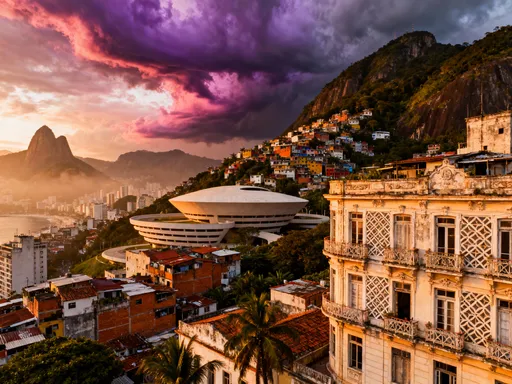
Niemeyer’s influence is perhaps most visible in the city of Niterói, just across the bay, where his Niterói Contemporary Art Museum rises like a futuristic UFO from a cliffside overlooking the water. The building’s saucer-like shape, supported by a slender concrete column, creates a sense of weightlessness and dynamism. Inside, a spiraling ramp leads visitors upward, offering changing perspectives of the exhibition space and the panoramic views beyond. The museum is more than a container for art; it is a work of art in itself, embodying Niemeyer’s belief that architecture should inspire wonder and emotion.
Another iconic example is the Cathedral of Saint Francis of Assisi in downtown Rio. Unlike traditional Gothic cathedrals with spires and stained glass, Niemeyer’s design is a striking modernist cone, clad in stained glass panels that filter light in vibrant colors. The interior, circular and open, evokes a sense of unity and inclusivity, reflecting the spirit of renewal in the Catholic Church during the mid-20th century. The cathedral’s bold form stands in contrast to the surrounding colonial and Belle Époque buildings, yet it feels harmonious within Rio’s architectural mosaic—a testament to the city’s ability to embrace innovation without erasing its past.
Niemeyer’s philosophy was rooted in the idea that architecture should serve the people. Many of his public buildings, such as the Ministry of Education and Health in Rio (one of the earliest modernist skyscrapers in the Americas), were designed to be accessible and uplifting. He used reinforced concrete not just for its structural efficiency, but for its plasticity—the ability to shape it into sweeping curves that mimicked the human body and the natural landscape. This fusion of form and function became a hallmark of Brazilian modernism, influencing generations of architects across the country. Today, Niemeyer’s legacy lives on not only in his buildings but in the way Rio continues to value architecture as a form of cultural expression.
Tropical Adaptations: Design Meets Climate
Rio’s architecture is not only shaped by history and artistic vision but also by the relentless demands of its tropical climate. With high humidity, intense sunlight, and frequent rainfall, buildings must be designed to provide comfort, durability, and resilience. Over centuries, architects and builders have developed a range of passive cooling strategies that prioritize airflow, shade, and thermal regulation. These solutions are not merely technical; they are deeply embedded in the city’s design culture, reflecting an intuitive understanding of how to live well in a hot, humid environment.
One of the most common features in traditional and modern homes alike is the high ceiling. By allowing hot air to rise above living spaces, high ceilings create a more comfortable environment without relying on air conditioning. This principle is often combined with cross-ventilation—strategically placed windows and openings that allow breezes to flow through the house. In many older homes, especially in Santa Teresa and Lapa, you’ll find large wooden doors and louvered shutters that can be adjusted to control light and airflow, responding dynamically to changing weather conditions.
Another distinctive element is the use of shaded verandas, known locally as varandas. These semi-outdoor spaces serve as transitional zones between interior and exterior, offering protection from sun and rain while maintaining a connection to the outdoors. In beachfront homes, verandas often double as social areas, furnished with hammocks and chairs where families gather in the evening. Similarly, latticework screens, called mascaron or grades, are used to filter sunlight and provide privacy while allowing air to circulate. Made from wood or concrete, these perforated panels create beautiful patterns of light and shadow, adding aesthetic value to their functional role.
Roof design also plays a crucial role. Traditional tiled roofs, with their red clay tiles and overhanging eaves, help deflect rain and provide insulation. In modern constructions, flat roofs are sometimes used, but they are often equipped with green roofs or rooftop gardens that absorb heat and reduce urban temperatures. In hillside homes, rooftops are frequently converted into outdoor living spaces, offering panoramic views and additional room for social gatherings. These adaptations demonstrate how Rio’s architecture is not just about appearance, but about creating livable, sustainable environments that respond intelligently to their surroundings.
Contrasts in the Hills: Favelas and Informal Architecture
No discussion of Rio’s architecture would be complete without acknowledging the favelas—informal settlements that occupy the city’s steep hillsides. Often misrepresented in media as chaotic or dangerous, these communities are in fact remarkable examples of adaptive, community-driven design. Built incrementally over decades, favela homes are constructed with whatever materials are available—concrete blocks, corrugated metal, reclaimed wood—and expanded vertically as families grow. The result is a dense, organic urban fabric that defies conventional planning but thrives on ingenuity and resilience.
Walking through a favela like Rocinha or Vidigal, one is immediately struck by the complexity of the layout. Narrow staircases wind through the hills, connecting homes that are stacked one above the other, often with no formal street access. Each house is a testament to individual creativity, with brightly painted walls, handcrafted railings, and rooftop additions that maximize space. Despite limited resources, residents incorporate design elements that respond to climate and social needs—overhangs for shade, open layouts for ventilation, and shared courtyards that foster community interaction.
In recent years, efforts have been made to integrate favelas into the formal city through infrastructure improvements and architectural interventions. The introduction of cable car systems in communities like Complexo do Alemão has not only improved transportation but also symbolized a shift toward recognition and inclusion. Community centers, health clinics, and cultural spaces have been built using modern design principles, blending functionality with aesthetic dignity. These projects, often led by local architects and NGOs, aim to enhance living conditions without displacing residents or erasing the unique character of the neighborhoods.
Favela architecture challenges traditional notions of urban planning, offering lessons in flexibility, resourcefulness, and social cohesion. While they face real challenges—lack of sanitation, insecure land tenure, and vulnerability to landslides—their existence is a powerful reminder of how people adapt to constraints with creativity and determination. Rather than viewing them as problems to be solved, they can be seen as vital parts of Rio’s architectural landscape—spaces where design emerges not from blueprints, but from lived experience and collective effort.
Preservation vs. Progress: The Ongoing Battle
As Rio continues to evolve, it faces a critical challenge: how to balance preservation with progress. On one hand, the city boasts an extraordinary architectural heritage—from colonial churches to modernist masterpieces—that deserves protection. On the other, rapid urbanization, real estate development, and climate change pose serious threats to historic structures. Buildings are often abandoned, left to decay from neglect, or demolished to make way for high-rise apartments and shopping centers. In some cases, even protected landmarks have suffered damage due to lack of maintenance or inadequate enforcement of preservation laws.
Organizations like IPHAN play a crucial role in safeguarding Brazil’s cultural heritage. Through legal protections, restoration projects, and public awareness campaigns, they work to ensure that significant buildings are not lost to time. Local NGOs and community groups also contribute by advocating for heritage conservation and promoting adaptive reuse—transforming old buildings into museums, libraries, or affordable housing. These efforts are not just about saving bricks and mortar; they are about preserving the stories, identities, and memories embedded in the city’s streets.
Yet, the tension between old and new remains. In a city where land is at a premium and housing shortages persist, the pressure to develop is immense. Some argue that strict preservation laws hinder economic growth and social mobility, while others warn that unchecked development risks erasing Rio’s unique character. The solution may lie in a more integrated approach—one that values both historical continuity and sustainable innovation. For example, new constructions could be designed to harmonize with their surroundings, using materials and forms that respect the local context. Incentives for green building practices could also help reduce environmental impact while honoring the city’s architectural legacy.
In the end, Rio’s buildings are more than structures; they are mirrors of its past, present, and future. They tell stories of colonization, modernization, resistance, and hope. They reflect the dreams of architects, the struggles of communities, and the resilience of a city that has weathered countless changes. For travelers, looking beyond the postcard views to notice the details—the curve of a balcony, the pattern of a tile, the slope of a roof—is not just an act of observation, but of connection. It is a way to understand Rio not as a destination, but as a living, breathing entity, constantly reshaping itself while holding on to its soul. And that, perhaps, is the most beautiful design of all.