Wandering Through Time: Sana'a's Hidden Districts Uncovered
Sana’a isn’t just a city—it’s a living storybook etched in stone and spice-filled alleys. As one of the oldest continuously inhabited cities in the world, its districts pulse with history, culture, and unexpected charm. I walked through its winding lanes, each turn revealing a new layer of tradition and resilience. This is exploration at its most authentic—raw, real, and unforgettable. From the towering mud-brick towers of the Old City to the quiet rhythms of residential neighborhoods, Sana’a offers a journey not only through space but through centuries. Though travel to Yemen remains limited due to ongoing regional challenges, understanding its cultural heart through stories, histories, and the enduring spirit of its people remains both meaningful and deeply human.
The Heart of Old Sana’a – A First Step into Ancient Life
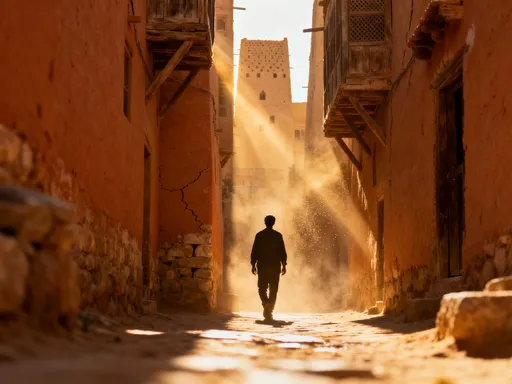
Stepping into the Old City of Sana’a feels like crossing a threshold not only between neighborhoods but between eras. Designated a UNESCO World Heritage Site in 1986, this historic core stands as one of the finest examples of traditional urban planning in the Arab world. Its skyline is defined by over 6,000 tower houses, some rising five to seven stories, their facades painted with striking geometric patterns in white lime. These multi-story dwellings, known locally as *qasabah*, were constructed using rammed earth, burnt brick, and stone—materials chosen not only for availability but for their ability to regulate temperature in a highland climate marked by hot days and cool nights.
The narrow, winding streets of the Old City are not the result of haphazard growth but a deliberate design shaped by centuries of social and environmental wisdom. The labyrinthine layout provides shade, reduces wind exposure, and fosters a sense of community through shared courtyards and interconnected homes. Doorways are modest, often unmarked, yet behind them lie family compounds that have been passed down through generations. The city’s layout also reflects traditional Islamic urban principles, where privacy is honored and public thoroughfares gradually lead toward more intimate, domestic spaces.
Walking through the district, the senses are immediately engaged. The scent of frankincense and cumin drifts from open market stalls. The sound of call to prayer echoes from minarets as children dart between alleyways, their laughter bouncing off ancient walls. The tactile experience of running a hand along a sun-warmed mud-brick wall connects the visitor to a craft tradition that dates back over 2,500 years. Despite the passage of time, the Old City remains a vibrant cultural epicenter, not a preserved relic, but a living, breathing community where daily life unfolds in harmony with heritage.
What makes the Old City truly remarkable is not only its architectural grandeur but its continuity. Unlike many historic cities where tradition has been replaced by modern convenience, Sana’a’s residents maintain customs in building, commerce, and social life that have changed little in centuries. This continuity is a testament to both cultural pride and practical adaptation. The tower houses, for instance, are naturally insulated—cool in summer, warm in winter—making them sustainable by modern standards without relying on energy-intensive technology. In this way, the Old City offers more than aesthetic beauty; it provides lessons in resilience, community, and sustainable living that resonate far beyond Yemen’s borders.
Al-Tahrir Square & the Pulse of Modern Sana’a
Just beyond the ancient walls, Al-Tahrir Square serves as a dynamic counterpoint to the quiet introspection of the Old City. As one of Sana’a’s most prominent public spaces, it functions as a hub of movement, commerce, and conversation. Surrounded by government buildings, banks, and mid-rise structures, the square is often filled with pedestrians, taxis, and the occasional public gathering. Unlike the enclosed intimacy of the old alleys, Al-Tahrir offers openness—wide sidewalks, traffic circles, and spaces where people pause, meet, and observe the rhythm of contemporary urban life.
The surrounding area is lined with cafés where men and families gather in the late afternoon, sipping tea or cardamom-scented coffee. These cafés are more than places to drink; they are informal centers of discussion, where news is exchanged and opinions shaped. Nearby, small shops sell mobile phones, electronics, and imported goods, reflecting a city engaged with the wider world even amid regional isolation. The presence of internet cafes and SIM card vendors indicates a population eager to stay connected, particularly younger residents who navigate global trends while rooted in local identity.
Transportation in this part of the city reveals the blend of old and new. While some still travel by foot or on donkeys in the Old City, Al-Tahrir is dominated by white taxis—often aging sedans painted in a uniform color—and shared minibuses that weave through traffic with practiced agility. Traffic flow can be chaotic, yet there is an unspoken order, a rhythm that locals understand instinctively. The sounds of horns, chatter, and the occasional call from a street vendor create a symphony of urban energy that contrasts sharply with the hushed corridors of the historic district.
Yet modernity here does not erase tradition. Even in this more contemporary space, cultural norms remain visible. Women in colorful traditional dresses walk with purpose, often in groups, while men in *futa* (wrapped skirts) and head coverings pause for conversation. Religious observance continues to shape the day—shops close briefly during prayer times, and the rhythm of life slows in deference to faith. Al-Tahrir Square, therefore, is not a rejection of heritage but a reinterpretation of it, where Yemeni identity evolves without losing its essence.
Bab al-Yemen: Where Old Meets New
Bab al-Yemen, or the Gate of Yemen, stands as one of the city’s most iconic landmarks—a centuries-old entrance that once marked the southern approach to Sana’a. Though the current structure dates largely from the 7th century with later Ottoman and Yemeni renovations, it continues to serve as both a physical and symbolic threshold. Passing through Bab al-Yemen today means stepping from the modern cityscape into the heart of the ancient quarter, where the pace slows and the air grows thick with the scent of spices and aged wood.
The area around the gate is a vibrant commercial zone, teeming with street vendors, small shops, and foot traffic that flows like a steady current. Stalls overflow with dates, honey, incense, and handwoven baskets. Artisans sell traditional daggers (*jambiyas*), silver jewelry, and embroidered textiles—crafts that have been perfected over generations. The barter system remains alive here; prices are not fixed, and negotiation is part of the social ritual. A purchase is rarely just a transaction—it often begins with a greeting, a smile, and a few minutes of conversation.
What makes Bab al-Yemen so significant is its role as a cultural hinge. It is not merely a boundary but a bridge between two worlds. On one side, the modern city pulses with the demands of daily life—bureaucracy, commerce, connectivity. On the other, the Old City preserves a way of life that resists the homogenizing forces of globalization. Yet the two are not in conflict. Instead, they coexist in a delicate balance, each informing the other. Young people pass through the gate on their way to school or work, carrying backpacks alongside traditional dress. Tourists (when they are able to visit) are greeted by guides who speak multiple languages but whose families have lived in the city for centuries.
The gate itself, with its arched entrance and weathered stone, has witnessed countless changes—wars, trade booms, periods of isolation. Yet it stands, a silent witness to continuity. Its preservation is not just about architecture but about memory. In a city where the past is never far from the present, Bab al-Yemen reminds visitors that heritage is not static. It moves, breathes, and adapts—just like the people who walk beneath it every day.
Exploring the Souqs: Commerce and Community in Every Alley
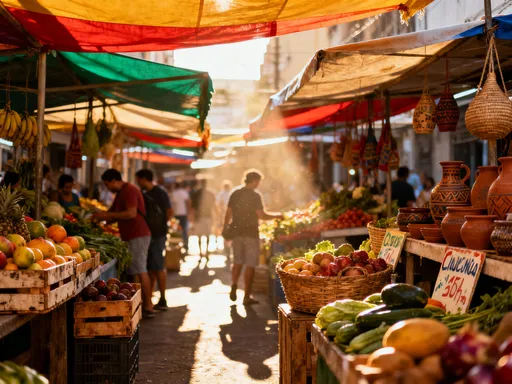
No visit to Sana’a would be complete without immersion in its traditional souqs—labyrinthine markets that are as much about social connection as they are about commerce. The most renowned, Suq al-Milh (the Salt Market), is just one of many specialized markets tucked within the Old City’s fabric. Others include Suq al-Qatt (the Qat Market), Suq al-Attarin (the Perfume Market), and Suq al-Kabir (the Great Market), each dedicated to specific goods and governed by its own rhythms and traditions.
The sensory experience is overwhelming in the best way. Spices are piled in mounds of crimson, saffron, and umber—cumin, turmeric, coriander, and the distinctive blend used in *hulba* (fenugreek paste). Vendors call out their prices, not with loud hawking, but with a steady, rhythmic cadence that blends into the ambient hum. The air is warm, scented with cardamom, dried limes, and the faint metallic tang of silver being polished. Textiles hang in cascades—hand-embroidered *thobes*, striped cotton dresses, and woolen shawls dyed with natural pigments.
But the souqs are more than places to buy and sell. They are vital nodes of community life. Men gather in shaded corners to discuss politics, religion, or family news. Women, often in groups, move with purpose, inspecting goods with practiced eyes. Children dart between stalls, entrusted with small errands. The act of shopping is interwoven with relationship-building. A vendor might offer tea to a regular customer, or pause a transaction to inquire after a sick relative. These interactions reinforce trust, a currency as valuable as money in a society where personal bonds matter deeply.
Economically, the souqs sustain hundreds of families. Many vendors inherit their stalls from parents or grandparents, continuing trades that have existed for generations. The barter system, though less common than in the past, still surfaces in negotiations, especially for bulk purchases or between long-time customers. While cash is now standard, the spirit of exchange—fairness, respect, and mutual benefit—remains central. In times of hardship, the souq often becomes a space of mutual support, where credit is extended and goods shared among neighbors.
These markets also reflect Yemen’s historical role as a crossroads of trade. Centuries ago, Sana’a was a stop on caravan routes linking the Horn of Africa, the Arabian Peninsula, and the Indian subcontinent. Today, while international trade is limited, the souqs still carry echoes of that legacy. Spices, textiles, and incense connect the city to a broader regional network, even if the flow of goods is now more localized. The souqs, therefore, are not just economic centers but cultural archives—repositories of taste, scent, and skill that tell the story of a people shaped by movement and exchange.
Residential Quarters: Life Beyond the Tourist Path
Away from the main thoroughfares and markets, neighborhoods like Bani Al-Harith, Al-Walidya, and Arwa offer a glimpse into everyday life in Sana’a. These residential quarters, though less visited, are where the city’s soul resides—in quiet courtyards, family kitchens, and the laughter of children playing in shaded alleys. Homes here are often centuries old, their thick walls preserving coolness and privacy, yet adapted with modern touches: satellite dishes, solar panels, and occasional glass windows.
Daily routines unfold with a quiet dignity. In the early morning, women can be seen carrying water in large jugs, a necessity in areas where running water is intermittent. Men return from dawn prayers, stopping to chat with neighbors before beginning their workday. Elders sit on low stools outside their homes, sipping tea and observing the street with calm attention. The pace is unhurried, shaped more by natural light and family needs than by clocks or schedules.
Despite the challenges of limited infrastructure—sporadic electricity, water shortages, and aging buildings—residents maintain a strong sense of pride in their homes and community. Houses are meticulously maintained, with facades repaired using traditional techniques. Women decorate interior walls with hand-painted motifs, and courtyards are often filled with potted plants or small vegetable gardens. These acts of care are not merely practical; they are expressions of resilience and identity.
What stands out in these neighborhoods is the strength of intergenerational bonds. Grandparents live with their children and grandchildren, sharing responsibilities and wisdom. Meals are communal, often eaten from a single large dish. Religious observance is woven into daily life—prayer rugs are unfurled in homes, and children learn Quranic verses from an early age. This continuity is not imposed but lived, a natural part of existence in a culture that values ancestry and tradition.
For visitors, these quarters offer a rare opportunity to witness authenticity without performance. There are no staged shows or tourist-oriented displays—just real life, unfolding with grace and endurance. To walk through these alleys is to understand that Sana’a’s greatness lies not only in its monuments but in the quiet dignity of its people, who uphold their way of life with determination and love.
Cultural Crossroads: Religious and Academic Districts
Religion and learning have long been central to Sana’a’s identity, and certain districts reflect this deep intellectual and spiritual heritage. The Great Mosque of Sana’a, believed to be one of the oldest mosques in the world, stands as a cornerstone of the city’s religious life. Originally built in the 7th century on the orders of Caliph Umar, it has been expanded and restored multiple times, yet it continues to serve as a place of worship and community gathering. Its courtyard, shaded by ancient trees, hosts daily prayers and religious instruction, particularly during Ramadan.
Nearby, smaller mosques and *madrasas* (religious schools) dot the cityscape, their minarets rising above the rooftops. These institutions are more than places of worship—they are centers of education, where children and adults study the Quran, Islamic jurisprudence, and Arabic grammar. Some schools have operated continuously for centuries, preserving a scholarly tradition that once made Sana’a a beacon of Islamic learning in the region. While international access to these institutions is limited, their presence shapes the cultural fabric of the surrounding neighborhoods.
The connection between faith and daily life is evident in the rhythm of the city. The call to prayer marks the hours, structuring the day around moments of reflection and community. Religious festivals are celebrated with quiet devotion—homes are cleaned, special meals prepared, and families gather for prayer and storytelling. Even in times of hardship, spiritual practice remains a source of strength and cohesion.
Sana’a’s reputation as a center of scholarship is also tied to its manuscript heritage. While specific collections are not discussed here due to the need for factual accuracy and sensitivity, it is widely recognized that Yemen has preserved thousands of Islamic manuscripts, some dating back over a thousand years. These texts, housed in private and institutional libraries, cover theology, astronomy, medicine, and law, reflecting a rich intellectual tradition. The preservation of these works, often by families over generations, speaks to a deep respect for knowledge and history.
In these districts, spirituality is not separate from urban life—it is woven into it. A scholar may walk the same alley as a spice vendor; a student may pause to help an elder. The pursuit of knowledge is not confined to classrooms but lives in conversation, prayer, and daily practice. This integration of faith and learning gives Sana’a a unique depth, where the sacred and the everyday are not in conflict but in harmony.
Challenges and Resilience: The Reality Behind the Beauty
While Sana’a’s beauty and heritage are undeniable, the city also faces profound challenges. Years of conflict, economic instability, and limited infrastructure have placed immense strain on its people and historic fabric. Many buildings in the Old City require urgent restoration, and traditional craftsmanship struggles to survive without adequate support. Access to clean water, reliable electricity, and medical care remains inconsistent, particularly in outlying neighborhoods.
Despite these hardships, the spirit of Sana’a endures. Residents continue to maintain their homes, uphold traditions, and care for one another. Community networks remain strong, with families and neighbors sharing resources and support. Cultural pride persists—people dress in traditional attire, celebrate festivals, and pass down skills like embroidery, silverwork, and architecture to younger generations.
Preservation efforts, though constrained, are ongoing. Local artisans, often with support from international cultural organizations, work to restore damaged buildings using traditional methods. These projects are not just about saving structures but about sustaining identity. Each repaired wall, each restored window, is an act of resistance against erasure. The people of Sana’a understand that their city is not just a collection of buildings but a living legacy.
For now, travel to Sana’a remains restricted due to security advisories issued by many governments. These warnings are serious and should be respected. Yet understanding the city from afar—through stories, histories, and cultural documentation—remains valuable. It fosters empathy, counters stereotypes, and keeps hope alive for a future when peaceful visitation may once again be possible.
Mindful engagement matters. When travel resumes, visitors will have a responsibility to approach Sana’a with respect, humility, and a willingness to listen. Tourism, if managed thoughtfully, could support local economies and preservation efforts. But it must be done in a way that honors the dignity and autonomy of the people who call this city home.
Sana’a as a Testament to Enduring Spirit
Sana’a is not a city that reveals itself quickly. Its beauty is not in grand monuments or tourist spectacles, but in the quiet details—the hand-carved wooden window, the pattern of a woven dress, the sound of a child reciting Quran in a courtyard. Each district, from the bustling souqs to the serene residential alleys, tells a piece of Yemen’s long and layered story. Together, they form a mosaic of resilience, faith, and cultural continuity.
To explore Sana’a, even through words and images, is to practice a different kind of travel—one rooted in patience, respect, and deep listening. It invites us to look beyond headlines and recognize the humanity that persists even in the most difficult circumstances. The city’s enduring spirit is not defined by its challenges but by how its people meet them—with creativity, faith, and an unyielding love for their heritage.
As the world changes at an accelerating pace, Sana’a offers a powerful reminder: that tradition is not the opposite of progress, but a foundation for it. That community can thrive without modern convenience. That beauty can endure even in hardship. And that some of the most profound journeys are not across oceans, but into the heart of what it means to be human.
May the day come when more can walk its ancient streets in peace. Until then, may we honor Sana’a not with pity, but with admiration—for its past, its present, and the quiet strength that carries it forward.