You Gotta See These LA Landmarks—They’re Literally Everywhere
Ever just stumbled upon a building and thought, Wait, is that…? Yeah, that happens all the time in Los Angeles. I didn’t expect to care so much about architecture, but LA’s iconic structures? Mind-blowing. From the skyline to hidden gems, these landmark buildings aren’t just for photos—they shape the city’s vibe. Whether you're a first-time visitor or a long-time resident, the city’s architectural landscape tells a story of ambition, creativity, and reinvention. Let me take you through the ones worth your time, the best angles to see them, and how to skip the tourist traps. This isn’t just a tour of steel and glass—it’s a journey through the soul of Los Angeles.
The Skyline That Defines a City: Downtown LA’s Architectural Pulse
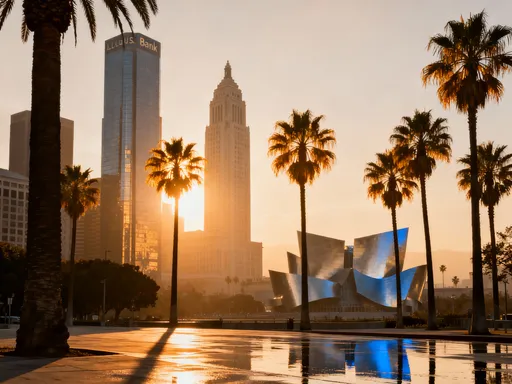
Los Angeles’ skyline is not just a cluster of tall buildings—it’s a living timeline of the city’s evolution. Rising from the heart of Downtown, the U.S. Bank Tower, once known as the Library Tower, dominates the horizon at 1,018 feet, making it the tallest building in California. Completed in 1989, its sleek black granite and reflective glass exterior give it a commanding presence, especially when illuminated at night. Just a few blocks away, the stepped pyramid of Los Angeles City Hall stands in contrast—a 1928 Art Deco and Moderne hybrid that once reigned supreme as the city’s tallest structure. Together, these two towers represent different eras of ambition: one rooted in early 20th-century civic pride, the other in late-century economic confidence.
What makes Downtown LA’s skyline truly compelling is its openness. Unlike New York or Chicago, where skyscrapers press tightly together, LA’s buildings are more spread out, allowing for dramatic sightlines and unexpected moments of clarity. From Bunker Hill, visitors can stand at Grand Park’s overlook and take in a sweeping panorama that includes the Cathedral of Our Lady of the Angels, with its striking geometric façade, and the newer Wilshire Grand Center, whose spire lights up in shifting colors each evening. These vantage points offer not just photo opportunities, but a sense of orientation—helping you understand how the city layers its history vertically.
For the best experience, timing is key. Early mornings on weekends are ideal for skyline viewing, when foot traffic is light and the air tends to be clearer. The golden hour just before sunset casts a warm glow across the glass towers, making the U.S. Bank Tower shimmer like a monolith. If you’re planning photography, bring a polarizing filter to reduce glare and enhance contrast. And while many flock to the OUE Skyspace LA for its glass-bottom sky deck, consider that the view from the free observation areas near The Broad museum is nearly as impressive—and without the long lines or admission fee.
Exploring Downtown’s architectural pulse isn’t just about looking up—it’s about moving through space. The city’s embrace of mixed-use development means that historic buildings now house boutique hotels, rooftop bars, and art galleries. This blend of old and new gives the skyline a human scale, inviting you to step inside and experience the spaces rather than just admire them from afar. Whether you’re walking from Pershing Square to the Historic Core or taking the free DASH Downtown shuttle, the journey itself becomes part of the discovery.
The Cultural Heart: Walt Disney Concert Hall and Its Neighborhood
No structure in Los Angeles embodies architectural audacity quite like the Walt Disney Concert Hall. Designed by Frank Gehry and opened in 2003, its flowing stainless steel curves resemble a fleet of silver sails caught in a perpetual wind. From certain angles, the building seems to shimmer and shift, its surface reflecting the changing light of the day. But this is not just a sculptural marvel—it’s the home of the Los Angeles Philharmonic and a symbol of the city’s commitment to the arts. Even if you don’t attend a concert, walking around the exterior and through the adjacent garden is a full sensory experience.
The concert hall’s impact extends far beyond music. Its presence helped catalyze the revitalization of downtown’s cultural district, drawing visitors to a part of the city that was once overlooked. Just across the street, The Broad museum, with its porous white façade resembling a honeycomb, offers free admission and houses an impressive collection of contemporary art. Nearby, the Museum of Contemporary Art (MOCA) adds depth with rotating exhibitions and a focus on post-1940s works. Together, these institutions create a cultural triangle that rewards slow, thoughtful exploration.
For visitors, navigating this area can be seamless with a little planning. Parking is available in several nearby garages, including the one beneath The Broad, but it’s often more convenient—and cost-effective—to take the Metro B or D Line to the Civic Center/Grand Park station. Once you’re on foot, everything is within a ten-minute walk. If you’re visiting during lunchtime, consider grabbing a bite at Otium, the restaurant adjacent to The Broad, which offers seasonal Californian cuisine in a light-filled space with views of the concert hall’s garden.
The garden itself, designed by Italian landscape architect Gianna A. Los Angeles, is an integral part of the concert hall’s design. Winding pathways lead through native plants, fountains, and shaded seating areas, creating a peaceful retreat from the urban bustle. Benches are strategically placed to offer framed views of the building’s curves, encouraging contemplation. And for families, the outdoor organ—playfully nicknamed the “French fry” due to its tubular design—is a hit with children, who often mimic conducting an invisible orchestra.
While the interior of the concert hall is acoustically renowned, public access is limited to ticketed events or guided tours. However, the exterior and surrounding plaza are fully accessible during daylight hours, making it one of the most democratic architectural experiences in the city. Whether you’re an architecture enthusiast or simply passing through, spending even 30 minutes here can shift your perception of what a civic building can be.
Art Deco Majesty: The Eastern Columbia Building and Historic Core Revival
Standing proudly at the corner of Broadway and 9th Street, the Eastern Columbia Building is a jewel of Art Deco design. Completed in 1930, its vibrant turquoise terra-cotta façade and clock tower make it one of the most photographed buildings in the Historic Core. At a time when Los Angeles was expanding westward, this 13-story structure served as both a department store and a symbol of modernity. Its geometric patterns, zigzag motifs, and ornate metalwork reflect the optimism of the pre-Depression era, a time when LA saw itself as the future of American urban life.
After decades of decline, the Eastern Columbia was meticulously restored in the 2000s and converted into luxury lofts. This transformation was part of a broader revival of the Historic Core, where dozens of early 20th-century buildings have been repurposed into residences, hotels, and creative workspaces. The Ace Hotel, housed in the former United Artists Theatre, is another standout, blending preservation with contemporary style. These adaptive reuse projects have breathed new life into the neighborhood, attracting young professionals, artists, and boutique businesses.
Walking through the Historic Core today feels like stepping between eras. Original signage, restored tile work, and vintage elevators coexist with modern cafes and pop-up galleries. Guided walking tours—offered by organizations like the Los Angeles Conservancy—are an excellent way to appreciate the depth of history. These tours often highlight lesser-known details, such as the building’s original pneumatic tube system or the hidden rooftop garden that once served employees.
For safety, it’s best to explore the area during daylight hours or as part of an organized tour. While the neighborhood has improved significantly, some blocks remain transitional, especially in the evenings. Sticking to main thoroughfares like Broadway and Spring Street, and avoiding isolated alleys, ensures a pleasant experience. Pair your visit with a coffee at Alibi Coffee Co. or dinner at Perch, a rooftop restaurant with panoramic views and a retro-chic ambiance that complements the surroundings.
Modern Marvel: The Getty Center’s Hilltop Masterpiece
Perched atop the Santa Monica Mountains, the Getty Center is more than a museum—it’s an architectural pilgrimage. Designed by Richard Meier and opened in 1997, the complex is a masterclass in harmony between structure and landscape. Its travertine-clad buildings, arranged across a series of terraces, seem to grow organically from the hillside. Natural light floods the interiors through skylights and glass walls, while outdoor courtyards and gardens invite contemplation. The central garden, designed by Robert Irwin, is a living artwork in itself, with winding paths, water features, and over 500 plant species arranged to evoke a sense of discovery.
Reaching the Getty requires a short but memorable tram ride from the parking structure below. This ascent—through native chaparral and with views unfolding behind you—creates a sense of separation from the city, preparing visitors for a more reflective experience. The tram operates every few minutes, and parking reservations are recommended on weekends. While there’s a fee for parking, admission to the museum and its collections is free, a rare gift in a city where cultural access often comes with a price tag.
Inside, the Getty houses an impressive collection of European paintings, sculptures, and decorative arts, including works by Van Gogh, Rembrandt, and Monet. But the building itself is as much a draw as the art. Meier’s use of light, space, and material creates a serene atmosphere that enhances the viewing experience. Hallways open unexpectedly to courtyards, staircases lead to hidden viewpoints, and every turn offers a new perspective of the city below.
To make the most of your visit, arrive early or late in the day to avoid peak crowds. Midweek visits are especially peaceful. Wear comfortable shoes—the site spans 24 acres, and walking is inevitable. Don’t miss the photography gallery, which often features rotating exhibitions that explore the medium’s evolution, or the architecture and design pavilion, which occasionally highlights LA’s own built environment. And if you’re visiting with children, the Family Room offers interactive activities that make art accessible without sacrificing depth.
The Getty’s commitment to accessibility extends beyond physical design. Audio guides, large-print materials, and wheelchair availability ensure that all visitors can engage meaningfully. Signage is clear and unobtrusive, allowing the architecture to speak for itself. Whether you’re drawn by the art, the views, or the design, the Getty Center offers a rare moment of stillness in a fast-moving city.
Pop Culture Icon: Capitol Records Building and Hollywood’s Soundtrack
On Vine Street, just north of Hollywood Boulevard, stands a building that looks like a stack of vinyl records about to spin into motion. The Capitol Records Building, completed in 1956, was the world’s first circular office tower and remains a symbol of LA’s musical legacy. Its 13 stories rise like a turntable, topped with a neon crown that blinks “HOLLYWOOD” in Morse code at night. For decades, this was the home of recordings by legends like Frank Sinatra, Nat King Cole, and later, The Beach Boys and Beck. Even today, artists still record in its famed echo chambers, preserving its sonic heritage.
While the building is still an active studio, it’s not open for public tours. However, that doesn’t mean you can’t appreciate it up close. The sidewalk on Vine offers excellent views, especially in the early evening when the tower lights up. For a unique photo, stand at the intersection of Vine and Yucca and frame the building against the palm-lined streetscape. Nearby, the Capitol Records parking lot sometimes hosts pop-up events or record fairs, so it’s worth checking local listings if you’re visiting during the weekend.
Pair your visit with a walk down Hollywood Boulevard, where you can spot the Capitol Records star on the Walk of Fame. Just a few blocks away, the Pantages Theatre—a 1930 Art Deco gem—hosts Broadway-style shows and adds to the area’s entertainment pedigree. For a bite, try Musso & Frank Grill, a historic eatery that’s been serving stars since 1919. Its old-world charm and classic menu make it a perfect complement to the day’s theme.
What makes the Capitol Records Building special is not just its design, but its endurance. In a city that constantly reinvents itself, this tower has remained a constant, a monument to the art of recording and the cultural impact of music. It reminds us that architecture can carry sound, memory, and emotion—not just shelter people.
Civic Pride: Los Angeles City Hall’s Timeless Presence
Rising 454 feet with a distinctive pyramid crown, Los Angeles City Hall has been a fixture of the skyline since 1928. Designed by a consortium of architects including John Parkinson, it was built to symbolize transparency, progress, and civic unity. For decades, it was the tallest building in the city, a restriction enforced by ordinance to preserve views and prevent overcrowding. Though that rule no longer applies, City Hall’s central location and classical design ensure it remains a focal point of downtown.
The building’s exterior blends Beaux-Arts, Art Deco, and Gothic elements, with intricate carvings, bronze doors, and a grand entrance staircase. Inside, the rotunda soars with marble columns and a skylight that bathes the space in natural light. While public access is limited to certain areas, the ground floor is open during business hours and features historical exhibits about the city’s development. Occasionally, the observation deck on the 27th floor opens for special events or tours, offering one of the most underrated views in LA—panoramic, unobstructed, and free of crowds.
City Hall has also played a role in film and television, appearing in everything from *Dragnet* to *Chinatown* to *The Artist*. Its image is so ingrained in the public consciousness that it often stands in for “city government” in popular culture. Yet beyond symbolism, it remains a working seat of government, where council meetings, public hearings, and community events take place.
For visitors, the best way to appreciate City Hall is to approach it on foot. Grand Park, which stretches from City Hall to the Music Center, offers a green corridor ideal for a morning walk or afternoon picnic. The park’s seasonal events, from outdoor concerts to food truck festivals, bring life to the civic space. And during the holidays, the building is illuminated in festive colors, adding warmth to the urban landscape.
Beyond the Postcard: Hidden Structural Gems Across LA
While the skyline and famous facades capture attention, some of LA’s most moving architectural experiences are found off the beaten path. Take the Bradbury Building in Downtown—a five-story office building from 1893 that feels like stepping into a Victorian dream. Its interior is legendary: a central atrium flooded with natural light, ornate iron railings, open cage elevators, and marble stairs that curl like ribbons. Though it appears in films like *Blade Runner* and *500 Days of Summer*, seeing it in person is far more powerful. Visit on a weekday morning to avoid crowds, and remember that it’s still a functioning office space—so keep voices low and respect the tenants.
Another hidden gem is the Watts Towers, a 30-year labor of love by Italian immigrant Simon Rodia. Rising from a residential neighborhood, these 17 interconnected sculptures are made entirely of steel, mortar, and found objects—bottles, tiles, seashells, even porcelain dolls. Standing over 99 feet tall, they are both fragile and defiant, a testament to individual creativity in the face of obscurity. The site is now a museum and cultural landmark, open for guided tours that explain Rodia’s vision and technique.
Exploring these lesser-known sites requires a different kind of tourism—one based on curiosity rather than checklists. Use public transit or bike routes to move between neighborhoods, and consider downloading the LA Conservancy’s self-guided tour maps. Always respect private property; many architectural treasures are in residential areas, and while they can be admired from the street, trespassing is never acceptable.
By seeking out these quieter landmarks, you engage with LA on a deeper level. You begin to see the city not as a collection of postcard views, but as a living, evolving entity shaped by countless hands and histories.
Buildings That Tell Stories—Why LA’s Landmarks Matter
Los Angeles is often misunderstood as a city without a center, without history, without architecture worth studying. But the truth is quite the opposite. Every landmark—from the soaring Getty to the humble Watts Towers—tells a story of vision, resilience, and cultural identity. These buildings are not just backdrops for photos; they are active participants in the city’s life, shaping how we move, gather, remember, and imagine.
Understanding them deepens the travel experience. It transforms a casual stroll into a meaningful journey. It allows you to see beyond the surface of sunlit facades and recognize the values, struggles, and dreams embedded in the bricks and steel. Whether you’re a mother exploring with your children, a retiree rediscovering the city, or a visitor seeking authenticity, LA’s architectural landmarks offer connection and inspiration.
So the next time you pass a building that makes you pause, take a moment. Look closely. Read the plaque. Walk around the block. You might just find that the city is speaking to you—not in words, but in form, light, and space. And in that quiet conversation, you’ll discover the true heart of Los Angeles.