What I Discovered in the Atacama That Changed How I See Culture
You know that feeling when a place doesn’t just surprise you, but shifts something deep inside? That’s the Atacama Desert. Beyond its otherworldly landscapes, I stumbled upon cultural experiences so authentic and moving, they felt like whispers from the Earth itself. From ancient traditions to community rituals, this isn’t just travel—it’s connection. And honestly? I wasn’t ready for how much it would teach me. The silence here isn’t empty; it’s full of stories. The land isn’t barren; it’s deeply alive. What I discovered in northern Chile’s high-altitude desert reshaped my understanding of culture—not as something preserved in museums, but as a living, breathing force sustained through resilience, memory, and respect.
First Impressions: A Desert That Doesn’t Feel Like One
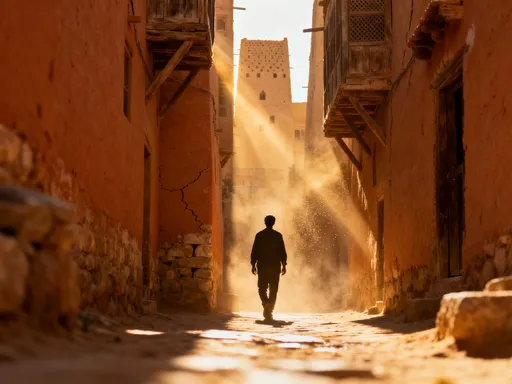
Arriving in San Pedro de Atacama, the air is thin and crisp, each breath a quiet reminder that you’re nearly 8,000 feet above sea level. The town itself feels timeless—low-slung adobe buildings with sun-bleached wooden doors, narrow streets dusted with fine sand that shifts with every passing breeze. There are no grand monuments or bustling cityscapes, yet the energy here is palpable. The surrounding landscape stretches in all directions: snow-capped volcanoes pierce the sky, salt flats shimmer like mirrors under the sun, and distant geysers send plumes of steam into the cool morning air. It’s easy to expect emptiness in a desert—especially one considered the driest place on Earth—but the Atacama defies expectation.
What surprised me most was not the stark beauty, but the presence of life—human and otherwise—thriving against all odds. This is not a forgotten corner of the world; it’s a crossroads where ancient traditions meet modern curiosity. The Atacameño people have lived here for over 10,000 years, adapting to extreme conditions long before tourism existed. Their presence is felt in the rhythm of daily life: children walking home from school in traditional wool ponchos, elders sitting outside their homes weaving quietly, families gathering in shared courtyards as the sun sets behind the Andes. The desert does not silence culture—it amplifies it.
The environment here shapes everything. Water is sacred, time moves differently, and survival depends on deep knowledge passed down through generations. Because resources are scarce, every action carries intention. Nothing is wasted. Every structure, every path, every ritual has meaning rooted in necessity and reverence. The Atacama is not just a destination for adventure seekers or stargazers—it is a place where culture has been forged by the very land itself. To understand it, one must first let go of preconceived ideas about deserts as lifeless and embrace the quiet vitality that pulses beneath the surface.
The Rhythm of Andean Time: Living with the Land
In the villages surrounding San Pedro—places like Toconao, Socaire, and Peine—life unfolds according to a calendar far older than any printed schedule. The Atacameño people follow an agricultural and spiritual rhythm tied to the solstices, lunar cycles, and the movement of water through ancient canals known as acequias. These irrigation systems, built centuries ago without modern tools, still carry glacial meltwater from the Andes to small family plots where quinoa, kiwicha (a type of amaranth), and potatoes grow in nutrient-poor soil. This isn’t farming as industrialized nations know it; it’s a form of devotion, a daily conversation with the earth.
During a visit to a farming family in Socaire, I watched as women carefully planted seeds by hand, their movements slow and deliberate. They explained that planting occurs only after community elders consult the stars and perform offerings to Pachamama, ensuring balance before disturbing the soil. Harvesting is equally ceremonial—done in unison, with songs sung in Kunza, the ancestral language slowly being revived. These practices are not folklore; they are essential. In a region where temperatures can swing 50 degrees between day and night and rainfall may not come for years, tradition isn’t nostalgia—it’s survival.
Time here is not measured in minutes or appointments, but in seasons and cycles. The year is divided into periods of sowing, tending, and rest. Festivals align with astronomical events, such as the winter solstice, when the sun’s return is celebrated with music, dance, and communal feasting. Children grow up knowing the names of constellations before they learn to read, taught by grandparents who remember stories older than written records. This deep connection to natural rhythms fosters a sense of patience, humility, and gratitude rarely found in faster-paced societies. To live in the Atacama is to accept that humans are not masters of nature, but participants in its ongoing story.
Pukará de Quitor: Where History Stands Guard
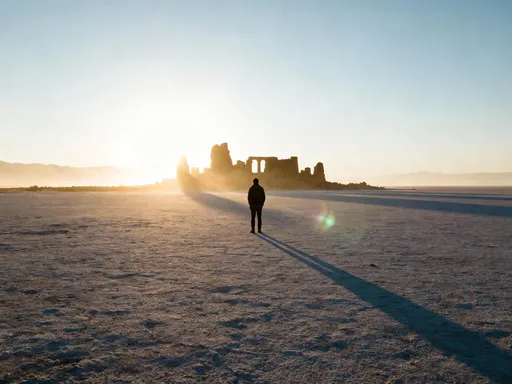
Rising from the edge of the desert plateau just outside San Pedro, the ruins of Pukará de Quitor stand as a testament to resistance and endurance. Built in the 12th century by the Atacameño people, this stone fortress was constructed using local materials—volcanic rock and clay—without mortar, yet it has withstood centuries of wind, sun, and conflict. Climbing the steep path to the top, one feels the weight of history in every step. The panoramic view includes the Chaxa Lagoon, the Cordillera de la Sal, and the distant silhouette of Licancabur Volcano—an active stratovolcano considered sacred. But more than the scenery, it’s the energy of the place that lingers.
Pukará de Quitor was not only a defensive stronghold but also a spiritual center. Before the arrival of the Inca Empire in the 15th century, the Atacameño lived in autonomous communities governed by ancestral customs. When the Spanish arrived in the 16th century, the fortress became a site of fierce resistance. In 1549, a battle took place here between indigenous warriors and conquistadors, ending in tragedy but not in defeat of spirit. Today, the site is protected as a national monument, yet for local communities, it remains more than a relic—it is a living symbol of identity and continuity.
During a guided visit led by a descendant of the Atacameño people, I learned that ceremonies are still held at the site during significant dates, such as the winter solstice. Visitors are asked to walk quietly, speak respectfully, and refrain from touching certain stones believed to hold spiritual power. Unlike many archaeological sites reduced to photo opportunities, Pukará de Quitor demands reverence. It reminds us that history is not linear—it echoes. The stones may be broken, but the memory they carry is intact. To stand here is to witness how culture survives not through conquest, but through quiet persistence.
Cultural Immersion: Weaving Stories and Textiles
In the village of Río Grande, I was welcomed into a family home where weaving has been practiced for generations. Inside a sunlit courtyard, women sat on low stools, hands moving rhythmically over wooden looms. The air carried the faint scent of dried plants—cochineal, molle bark, and tara pods—used to create natural dyes in vibrant reds, deep purples, and earthy yellows. Each thread told a story. One elder explained that patterns are not decorative; they are a language. A zigzag might represent water flowing through the desert; a diamond shape could symbolize the mountain peaks that shelter their communities; concentric circles reflect the Milky Way as seen from this high-altitude sky.
Weaving here is more than craft—it is memory made tangible. Girls learn from their mothers and grandmothers, beginning with simple stitches and gradually mastering complex designs that encode cosmology, migration routes, and ancestral knowledge. The wool comes from local sheep and alpacas, cleaned, spun, and dyed entirely by hand. A single textile can take weeks or even months to complete, depending on its intricacy. These pieces are not made for sale alone; they are worn during ceremonies, gifted at weddings, and passed down like heirlooms.
What struck me most was the sense of responsibility these artisans carry. They are not merely preserving a tradition—they are keeping a worldview alive. In a globalized world where fast fashion dominates, their work stands as an act of quiet defiance. Each pattern resists erasure. Each color honors the land. When I asked one weaver why she continues this work, she smiled and said, “Because if we stop, a part of us disappears.” That moment crystallized the essence of cultural resilience: it is not about resisting change, but about choosing what to carry forward.
Tasting Tradition: Food as Cultural Identity
One evening, I was invited to share a meal at a community-run dining space in the village of Tulor. There were no menus, no waitstaff—just long wooden tables set under a thatched roof, where families gathered as the sun dipped below the hills. The food arrived in clay pots: a rich stew called guatita, made with slow-cooked tripe, onions, and aji peppers; steamed potatoes in various colors; and a hearty preparation of llama meat seasoned with cumin and served with mote, a type of hulled wheat. A fermented corn drink, similar to chicha, was passed around in gourds. There was no rush, no distraction—just the sound of conversation, laughter, and spoons scraping bowls.
Food in the Atacama is not about indulgence; it is about sustenance, seasonality, and connection. Ingredients are sourced locally, preserved through drying or salting, and prepared using methods unchanged for centuries. Llama, for example, has been a primary protein source for millennia, its meat lean and nutritious, perfectly suited to the high-altitude environment. Quinoa and kiwicha provide essential carbohydrates, while wild herbs add flavor and medicinal properties. Nothing is imported out of convenience—every bite reflects the reality of living in isolation and harmony with limited resources.
More than nutrition, meals are moments of unity. Eating together reinforces kinship, honors ancestors, and strengthens community bonds. I noticed that before the first bite, an elder poured a small offering of drink onto the earth—a gesture of gratitude to Pachamama. This practice, repeated across villages, underscores a fundamental belief: that life is reciprocal. The land gives, and humans must give back. In a world increasingly disconnected from where food comes from, this ritual offers a powerful reminder of interdependence. To eat in the Atacama is not just to nourish the body, but to participate in a tradition of gratitude.
Ceremonies Under the Stars: Spirituality in the Silence
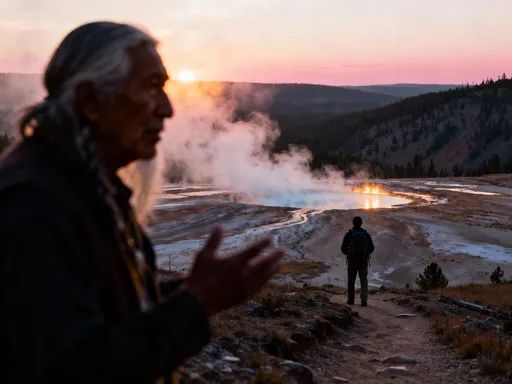
On a night of the full moon, I was quietly invited to witness a ceremony at a sacred site near the El Tatio geysers. The journey began before dawn, traveling by 4x4 across rocky terrain, then walking the final stretch in silence. About two dozen community members had gathered in a circle, dressed in traditional garments, faces illuminated by the soft glow of candlelight. There was no music, no performance—only low chanting in Kunza, the rhythmic shaking of a rattle made from a gourd, and the careful placement of coca leaves, flowers, and small offerings of food onto a woven cloth laid upon the earth.
This was not a spectacle for visitors. Attendance was by invitation only, extended only after weeks of building trust and showing respect. The ceremony honored Pachamama and the apus—the spirits of the mountains—and gave thanks for the past season while asking for balance in the months ahead. As I sat quietly at the edge of the circle, I felt a profound sense of humility. This was not spirituality as entertainment; it was devotion in its purest form—private, intentional, and deeply rooted in place.
What moved me most was the absence of dogma or proselytizing. There was no attempt to explain or justify beliefs to outsiders. Instead, there was simply presence. The cold desert air, the vast sky dotted with stars invisible in light-polluted cities, the sound of wind through stone—it all contributed to a feeling of sacredness that needed no translation. In that moment, I understood that some experiences cannot be captured in photographs or described in blogs. They can only be felt. And perhaps that is the greatest lesson the Atacama offers: that true connection often lies in what is unseen, unspoken, and respectfully left undisturbed.
Traveler’s Responsibility: How to Engage Respectfully
Visiting the Atacama as a traveler comes with a quiet responsibility—one that goes beyond leaving no trace. It means recognizing that culture is not a backdrop for adventure, but a living system deserving of dignity and autonomy. The most meaningful way to engage is through community-based tourism: hiring local guides, staying in family-run lodgings, and participating in experiences led by indigenous hosts. These choices ensure that economic benefits remain within the community and that narratives are shared on their own terms.
Photography, while tempting in such visually stunning surroundings, requires particular sensitivity. Many rituals, homes, and sacred sites are not meant for public viewing. Always ask permission before taking photos of people, especially during ceremonies. In some cases, the answer may be no—and that must be respected without question. Similarly, purchasing textiles or crafts directly from artisans supports cultural preservation far more than buying mass-produced souvenirs from tourist shops. Look for cooperatives or workshops that emphasize fair wages and traditional methods.
Equally important is the attitude one brings. Curiosity is welcome; voyeurism is not. Listening is more valuable than speaking. Learning a few phrases in Kunza or Spanish shows respect. But above all, slowing down is essential. The Atacama does not reward haste. Its lessons unfold gradually, in moments of stillness, in shared meals, in quiet walks through ancient lands. To truly see this culture, one must be willing to step outside the role of observer and become, even briefly, a participant in its ongoing story.
Conclusion
The Atacama Desert doesn’t give up its secrets easily. But for those who slow down and listen, it offers something rare: a living culture that has endured against all odds. This journey wasn’t about checking sights off a list—it was about rediscovering the power of human connection across time. The traditions I witnessed are not frozen in the past; they are actively sustained by people who choose, every day, to honor their ancestors while navigating the modern world. Their resilience is not born of isolation, but of intention.
What I discovered in the Atacama changed how I see culture—not as something exotic or distant, but as a dynamic, breathing force shaped by land, memory, and community. It taught me that authenticity isn’t found in staged performances, but in the quiet moments: a grandmother teaching a child to weave, a farmer blessing the soil, a song carried on the wind under a full moon. These are the threads that hold a people together.
If you go, don’t just look around. Look deeper. Ask not only what you can see, but what you can learn. And remember that the greatest gift you can offer is respect—not just for the place, but for the people who call it home. Because what you’ll find isn’t just a destination—it’s a way of being. One that whispers, patiently, across the silence: You belong here, too—if you listen.